
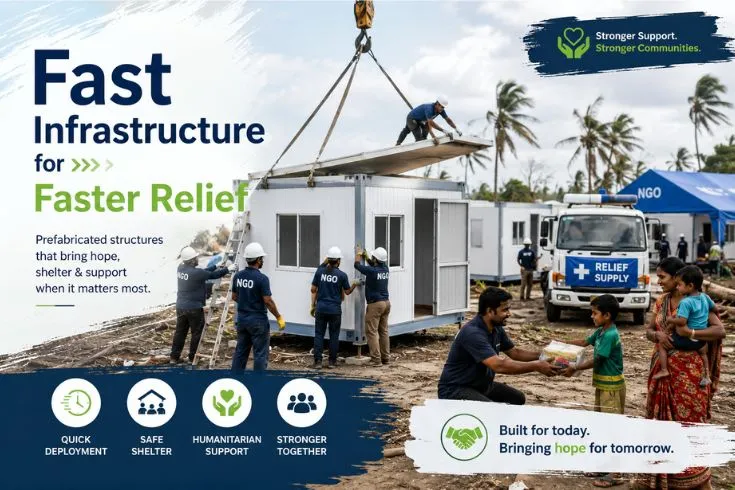
In recent years, NGO prefab uses have increased rapidly due to the growing demand for fast, affordable, and flexible infrastructure solutions. From disaster relief shelters to temporary schools and healthcare clinics, modular buildings are helping NGOs serve communities more efficiently. Prefabricated structures are cost-effective, easy to install, and highly adaptable, making them ideal for organizations working in remote or emergency locations.
NGOs often face challenges such as limited budgets, urgent timelines, and difficult terrain. Traditional construction methods can take months to complete and require higher labor and material costs. Prefabricated structures solve these problems by offering ready-to-install modular buildings that can be transported and assembled quickly. Here are the top five uses of prefabricated structures for NGOs.
Education is one of the major sectors where modular buildings are making a significant impact. NGOs working in rural areas or disaster-affected regions often require classrooms that can be installed quickly. Prefabricated school buildings provide a safe and comfortable learning environment for students without long construction delays.
These structures can include classrooms, staff rooms, libraries, and computer labs. They are designed with proper ventilation, insulation, and lighting to create a productive educational atmosphere. Modular school buildings are also expandable, allowing NGOs to add more classrooms as student numbers grow.
Healthcare NGOs frequently need portable clinics in underserved communities. Prefabricated clinics offer an efficient solution for setting up healthcare centers in remote villages, emergency zones, or temporary camps.
These modular buildings can be customized for consultation rooms, pharmacies, diagnostic centers, vaccination units, and maternity care facilities. Since they are quick to install, NGOs can respond faster during health emergencies or natural disasters. Prefabricated healthcare units are also easy to relocate when required, making them highly practical for outreach programs.
One of the most important NGO prefab uses is disaster relief housing. During floods, earthquakes, cyclones, or other emergencies, NGOs need immediate shelter solutions for affected families.
Prefabricated shelters can be manufactured and deployed rapidly, providing safe temporary housing within days. These shelters are durable, weather-resistant, and designed for basic comfort. They can also include sanitation facilities, sleeping areas, and storage spaces.
Compared to traditional construction, modular shelters reduce response time significantly and help NGOs support more people during emergencies.
NGOs working on field projects require temporary or semi-permanent office spaces for staff coordination and operations management. Prefabricated office structures are ideal because they are easy to transport, install, and maintain.
These offices can include meeting rooms, workstations, reception areas, storage units, and staff accommodations. Modular office buildings are commonly used at construction sites, rural development projects, rehabilitation camps, and community programs.
Their flexibility allows NGOs to relocate office setups whenever project locations change, helping organizations reduce infrastructure expenses.
Many NGOs conduct vocational training and community development programs to empower local communities. Prefabricated training centers provide a practical and affordable infrastructure solution for these initiatives.
These modular buildings can be used for workshops, digital literacy programs, women empowerment activities, and skill development classes. NGOs can customize the layout based on the type of training being offered.
Because prefabricated structures are scalable, organizations can expand training facilities as programs grow. This helps NGOs create long-term social impact while maintaining budget efficiency.
Prefabricated structures are transforming the way NGOs build and operate essential infrastructure. Whether it is schools, clinics, shelters, offices, or training centers, modular buildings offer speed, affordability, and flexibility. As humanitarian and development projects continue to grow across India, prefabricated construction is becoming a reliable solution for NGOs seeking efficient infrastructure development.
By investing in modular buildings, NGOs can focus more on delivering social impact and less on lengthy construction processes.
WhatsApp us