
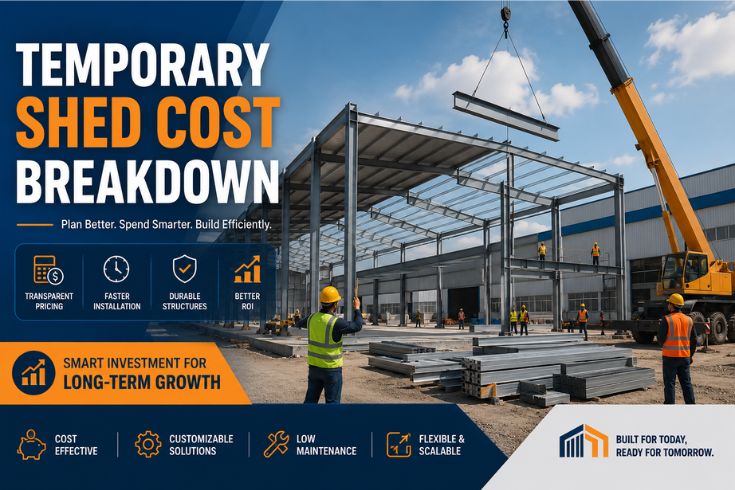
Temporary sheds are becoming a preferred infrastructure solution for industries, warehouses, construction sites, agriculture, and commercial businesses. Their affordability, quick setup, and flexible usage make them highly attractive compared to traditional construction. However, before investing in a prefab structure, understanding the temporary shed cost is essential for proper budget planning and better return on investment.
Businesses today focus on reducing infrastructure expenses while maintaining operational efficiency. This is where modern prefab structures provide excellent value through competitive prefab pricing and long-term savings.
The overall temporary shed cost depends on several important factors. Each project has unique requirements that influence the final installation budget.
The size of the shed is one of the biggest factors affecting temporary shed cost. Larger sheds require more steel framework, roofing sheets, support columns, and labor. Complex structural designs or customized layouts can also increase prefab pricing.
For example, industrial storage sheds generally cost more than basic site office sheds because of additional structural strength and larger dimensions.
The quality of materials used directly impacts both durability and temporary shed cost. High-grade steel structures, insulated roofing panels, and corrosion-resistant materials may have higher upfront costs but reduce future maintenance expenses.
Premium materials improve the lifespan of prefab buildings and deliver better ROI over time. Businesses should balance budget limitations with long-term performance when evaluating prefab pricing.
Installation location plays a major role in determining temporary shed cost. Transportation charges, labor availability, and site accessibility affect the total project expense.
If the installation area requires land leveling, foundation work, or additional structural support, overall prefab pricing can increase further.
Customization adds functionality but also affects temporary shed cost. Features like:
can increase the final budget depending on project requirements.
Businesses should only select features that support operational efficiency and long-term usability.
One major reason companies prefer prefab structures is the strong return on investment. Compared to traditional construction, temporary sheds provide several financial advantages.
Quick setup reduces project delays and operational downtime. Faster completion means businesses can begin operations sooner and recover investments quickly.
The overall temporary shed cost is usually lower than permanent buildings because prefab structures require less labor, reduced material wastage, and shorter construction timelines.
Modern prefab structures can be relocated, expanded, or modified easily. This flexibility improves asset utilization and enhances long-term ROI.
Durable materials and engineered designs help reduce ongoing maintenance expenses, making prefab pricing more cost-effective in the long run.
Before finalizing a prefab project, businesses should:
Careful planning helps avoid hidden expenses and improves project efficiency.
Understanding the complete temporary shed cost helps businesses make informed infrastructure decisions. From material selection and design to installation and maintenance, every factor contributes to the final budget.
With competitive prefab pricing, faster setup, and long-term operational benefits, temporary sheds continue to be a smart investment for modern businesses looking for affordable and flexible infrastructure solutions.
WhatsApp us