
Designing Future-Ready Schools with Prefabricated Smart Classrooms
In today’s rapidly evolving education landscape, institutions must adapt to changing learning needs. Designing future-ready prefabricated schools is the key to creating modern learning environments that support innovation, flexibility, and student success. Traditional construction methods often fail to keep up with the demand for speed and scalability, making prefabricated solutions an ideal choice for schools looking to upgrade their infrastructure.
Modern learning environments go beyond basic classrooms. They include smart classrooms, advanced laboratories, and flexible learning spaces that encourage collaboration and creativity. Prefabricated construction plays a vital role in delivering these spaces efficiently without compromising on quality or safety.
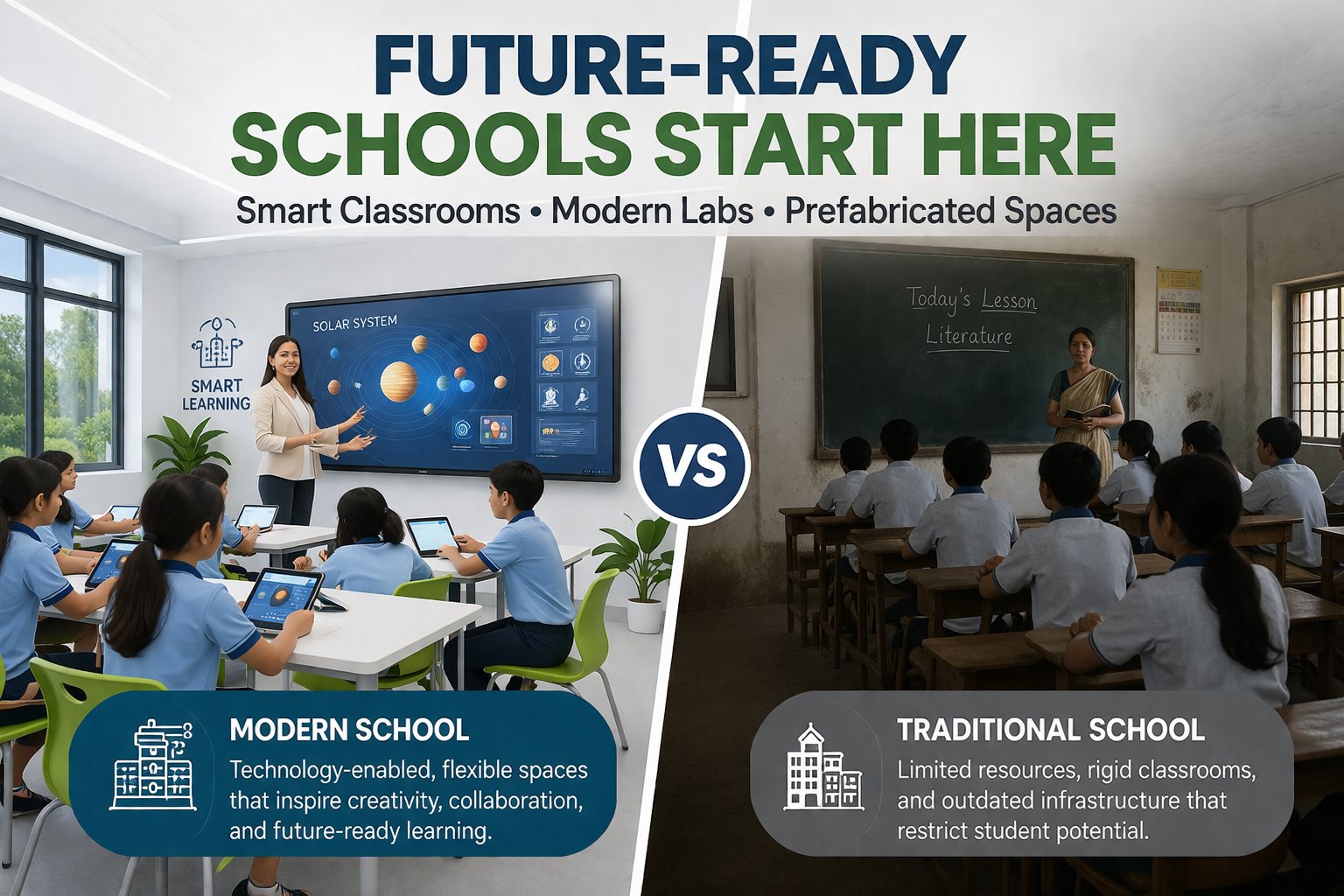
Smart classrooms are at the heart of future-ready schools. These classrooms are equipped with digital tools such as interactive boards, audio-visual systems, and high-speed internet connectivity. Prefabricated classrooms are designed to seamlessly integrate these technologies, allowing institutions to create engaging and interactive learning experiences. Additionally, they offer better ventilation, natural lighting, and ergonomic layouts that improve student concentration and productivity.
Another essential component of modern schools is advanced labs. Science labs, computer labs, and innovation hubs are critical for practical learning. Prefabricated lab spaces can be customized based on specific requirements, ensuring safety, functionality, and adaptability. With faster installation and modular designs, schools can expand or upgrade labs as needed, making them a future-proof investment.
Flexible learning spaces are also gaining importance in today’s education system. Unlike traditional rigid layouts, modern schools require spaces that can be easily reconfigured for group discussions, workshops, and extracurricular activities. Prefabricated structures provide modular designs that allow schools to adapt quickly to new teaching methods. This flexibility ensures that institutions remain relevant in a constantly changing academic environment.
Sustainability is another key factor in designing future-ready schools. Prefabricated construction uses eco-friendly materials and generates less waste compared to traditional building methods. Energy-efficient designs and reduced carbon footprint make these schools environmentally responsible. This not only benefits the planet but also enhances the institution’s reputation as a forward-thinking organization.
Speed and cost efficiency are major advantages of prefabricated schools. While traditional construction can take months or even years, prefabricated buildings can be completed in a matter of weeks. This significantly reduces project timelines and allows institutions to start operations sooner. Additionally, controlled manufacturing processes minimize material wastage and reduce labor costs, making prefabrication a cost-effective solution.
In conclusion, designing future-ready prefabricated schools is essential for creating modern learning environments that meet the needs of today’s students. With smart classrooms, advanced labs, flexible spaces, and sustainable design, prefabricated construction offers a comprehensive solution for educational infrastructure. As the demand for quality education continues to grow, embracing prefabrication will ensure schools stay ahead and provide the best possible learning experience.