
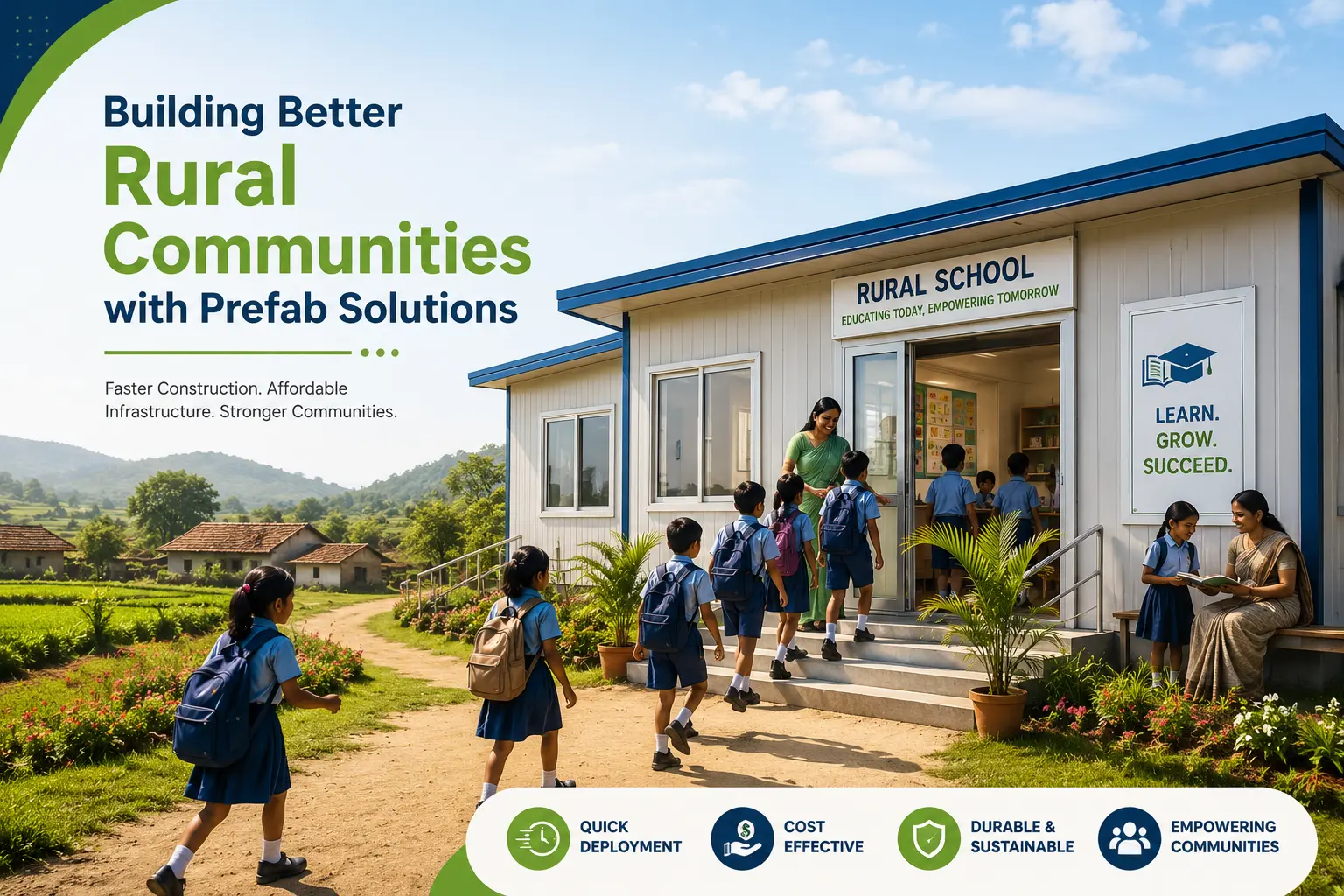
Rural development plays a crucial role in improving the quality of life for communities by providing access to essential infrastructure such as schools, healthcare centers, community halls, agricultural facilities, and administrative offices. However, many rural areas face significant challenges, including difficult terrain, limited transportation networks, labor shortages, and budget constraints. This is where rural prefab buildings have emerged as a practical and efficient solution.
With advancements in construction technology, prefabricated buildings are helping governments, NGOs, and private organizations deliver affordable infrastructure quickly and effectively. These structures are transforming the way rural development projects are planned and executed.
One of the biggest obstacles in rural development is accessibility. Many villages and remote regions have poor road connectivity, making it difficult to transport large quantities of construction materials and equipment.
Modular construction solutions address this challenge by manufacturing building components in a controlled factory environment. These components are then transported to the project site and assembled efficiently. Since most of the construction work is completed off-site, the need for extensive on-site labor and resources is significantly reduced.
This approach minimizes delays caused by weather conditions, transportation difficulties, and labor shortages, ensuring that critical infrastructure reaches rural communities faster.
Rural communities often require immediate infrastructure support, especially in areas affected by natural disasters, population growth, or economic development initiatives. Traditional construction methods can take several months or even years to complete.
In contrast, rural prefab buildings can be installed within a fraction of that time. Factory production and parallel site preparation allow projects to progress simultaneously, dramatically reducing overall construction timelines.
Whether it is a temporary healthcare center, a school building, an agricultural storage facility, or a government service center, prefabricated structures provide rapid deployment capabilities that help communities access essential services sooner.
Budget limitations are a common concern for rural development projects. Traditional construction often involves high labor costs, material wastage, and unexpected project delays that increase overall expenses.
Prefabricated buildings offer a highly cost-effective alternative. Since components are manufactured under controlled conditions, material usage is optimized, reducing waste and improving efficiency. Faster construction timelines also lower labor and equipment costs.
As a result, organizations can allocate their budgets more effectively and invest in additional community development initiatives. This makes affordable infrastructure more achievable for rural regions with limited financial resources.
Infrastructure is the foundation of community growth. Access to educational facilities, healthcare centers, training institutes, community halls, and agricultural support buildings directly impacts economic and social development.
Rural prefab buildings provide flexible and scalable solutions that can be customized according to community requirements. As population needs evolve, these structures can be expanded, relocated, or modified without significant disruption.
Their versatility enables rural communities to develop sustainable infrastructure that supports long-term growth while maintaining affordability and operational efficiency.
Modern prefabricated buildings are designed with durability and sustainability in mind. Many structures incorporate energy-efficient materials, insulated panels, and environmentally friendly construction practices.
These features help reduce operational costs while ensuring comfortable and functional spaces for occupants. The reduced construction waste associated with modular construction solutions also contributes to environmentally responsible development.
As governments and organizations continue investing in rural development, the demand for efficient and affordable construction methods is increasing. Rural prefab buildings offer an ideal solution by overcoming accessibility challenges, enabling quick deployment, reducing costs, and supporting sustainable community growth.
With their flexibility, durability, and cost-effectiveness, modular construction solutions are helping create the affordable infrastructure needed to improve living standards and drive long-term development in rural communities.
WhatsApp us