
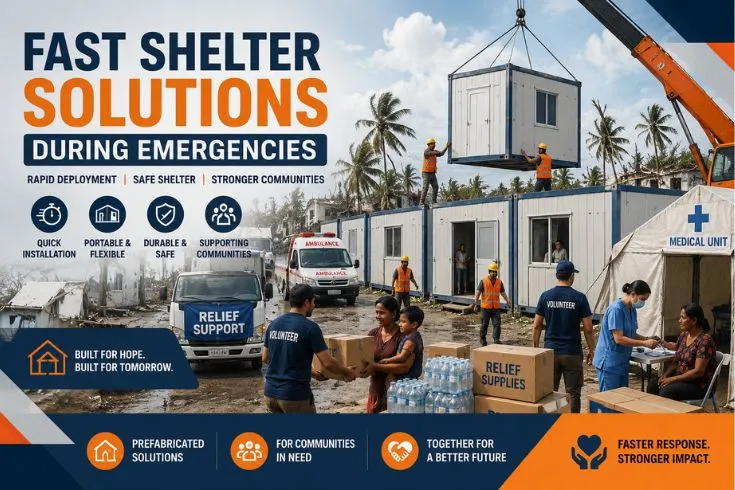
When natural disasters strike, quick response and safe shelter become critical. Disaster relief shelters play a major role in protecting affected communities during emergencies such as floods, earthquakes, cyclones, and wildfires. In recent years, prefab emergency housing has become one of the most effective solutions for rapid disaster response because of its portability, fast installation, and cost-effective construction methods. Prefabricated buildings help governments, NGOs, and relief organizations provide immediate shelter and essential facilities in challenging situations.
Prefabricated buildings are structures manufactured in factories and assembled on-site within a short period. Unlike traditional construction, these buildings are designed for rapid deployment, making them ideal for emergency response operations. Since time is extremely important during disaster recovery, prefab structures can be transported quickly and installed in remote or damaged areas with minimal labor and equipment.
One of the biggest advantages of disaster relief shelters is speed. Traditional construction may take weeks or months to complete, while prefab emergency housing can often be installed within days. This allows disaster victims to receive immediate protection from harsh weather conditions and unsafe environments. Fast installation also helps relief teams focus on medical care, food distribution, and rehabilitation efforts without delays caused by construction work.
Portability is another key benefit of prefab emergency housing. These structures are designed to be transported easily using trucks or containers. Many prefabricated units are modular, which means they can be expanded or relocated depending on the changing needs of disaster zones. This flexibility makes them highly suitable for temporary camps, emergency hospitals, mobile offices, and community shelters.
Modern prefabricated buildings are also built with durability and safety in mind. High-quality steel frames, insulated panels, and weather-resistant materials ensure the shelters can withstand difficult environmental conditions. In flood-prone or cyclone-affected areas, prefab structures provide stronger protection compared to temporary tents or weak conventional shelters. This makes them a reliable option for long-term rehabilitation projects as well.
Another important factor is cost efficiency. During disaster management, organizations often work with limited budgets and urgent timelines. Prefabricated buildings reduce labor costs, material wastage, and construction delays. Since most components are manufactured in controlled factory environments, the quality remains consistent while minimizing on-site expenses. This affordability allows relief agencies to provide shelter to a larger number of affected families.
In addition to housing, prefab structures support multiple disaster relief functions. They can be used as emergency medical clinics, quarantine centers, storage facilities, kitchens, classrooms, and command centers. Their versatile design makes them useful for both short-term emergency response and long-term recovery planning. Many humanitarian organizations now prefer prefab emergency housing because it offers both practicality and scalability.
Sustainability is another growing advantage of prefabricated construction. Many modern prefab buildings use eco-friendly materials and energy-efficient designs. Reduced construction waste and reusable components make them an environmentally responsible solution for disaster recovery projects. This helps communities rebuild faster while reducing environmental impact.
As climate change increases the frequency of natural disasters worldwide, the demand for fast and reliable infrastructure continues to grow. Disaster relief shelters and prefab emergency housing provide a smart solution for emergency preparedness and humanitarian support. Their speed, portability, affordability, and durability make prefabricated buildings an essential part of modern disaster relief efforts.
By investing in prefabricated construction solutions, governments and organizations can improve emergency response systems and provide safer living conditions for people during times of crisis. Prefab emergency housing continues to transform disaster management by offering reliable, fast, and flexible shelter solutions for affected communities worldwide.
WhatsApp us