
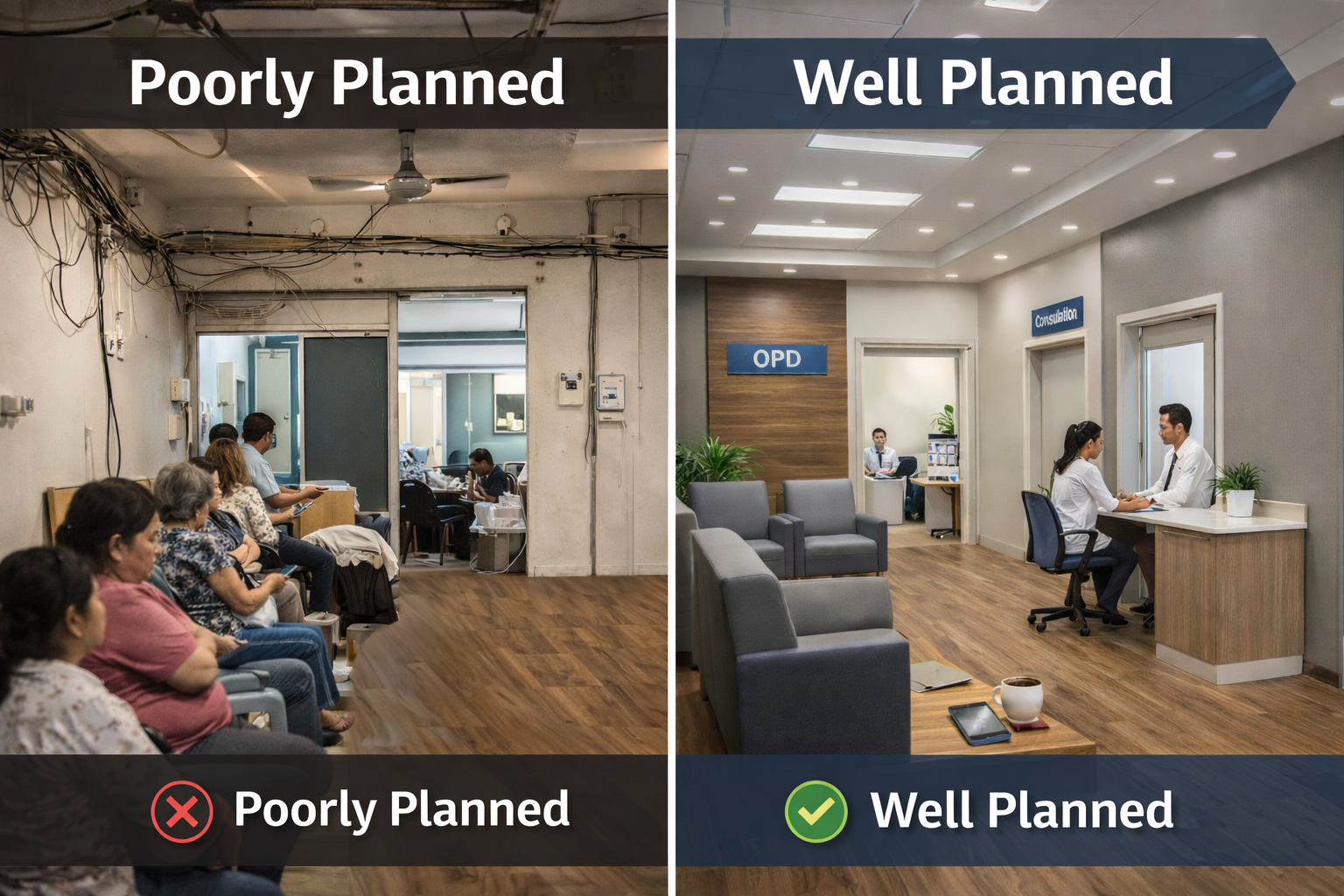
Prefab clinic construction has become a popular choice for doctors, hospital groups, and healthcare entrepreneurs looking for faster project delivery and cost efficiency. While prefabricated clinics offer speed and scalability, many projects fail to meet expectations due to poor planning and execution. The problem is not prefab construction itself, it’s how it is implemented. Understanding the most common mistakes in prefab clinic construction can help developers and doctors build facilities that are functional, compliant, and patient-friendly.
One of the biggest mistakes in prefab clinic construction is using generic layouts instead of healthcare-specific designs. Clinics require proper zoning for OPDs, consultation rooms, diagnostics, waiting areas, and infection control. Ignoring medical workflows can lead to operational inefficiencies and patient discomfort.
Solution:
Design prefab clinics with healthcare-focused planning, ensuring smooth patient flow, privacy, and staff efficiency from day one.
Many prefab clinic projects overlook essential healthcare regulations such as ventilation standards, fire safety, accessibility, and hygiene requirements. This can result in delays, penalties, or rework after construction.
Solution:
Choose prefab clinic construction solutions that follow healthcare compliance standards, local building codes, and medical safety norms right from the design stage.
Speed is a major advantage of prefab clinic construction, but cutting corners on materials or structure can compromise long-term durability. Poor insulation, weak steel frameworks, and substandard finishes can affect both safety and patient experience.
Solution:
Use high-quality steel structures, durable wall systems, and medical-grade finishes that ensure longevity without sacrificing speed.
Clinics require controlled airflow to maintain hygiene and patient comfort. Inadequate HVAC planning in prefab clinic construction can lead to poor air circulation and higher operational costs.
Solution:
Integrate HVAC and ventilation planning early to support infection control, temperature regulation, and energy efficiency.
Many clinics outgrow their space quickly. Failing to plan for future expansion defeats the purpose of modular construction.
Solution:
Prefab clinic construction should always allow modular expansion, additional consultation rooms, diagnostics, or floors without disrupting operations.
Prefab clinic construction is a powerful solution when done right. Most failures occur not because prefab clinics are flawed, but because of poor planning, design shortcuts, and lack of healthcare expertise. By focusing on medical functionality, compliance, quality materials, and future scalability, prefab clinics can deliver faster timelines without compromising care standards.
At Replotify, we specialize in healthcare-ready prefab clinic construction that balances speed, safety, and long-term value, helping doctors and developers build clinics that truly perform.
WhatsApp us