
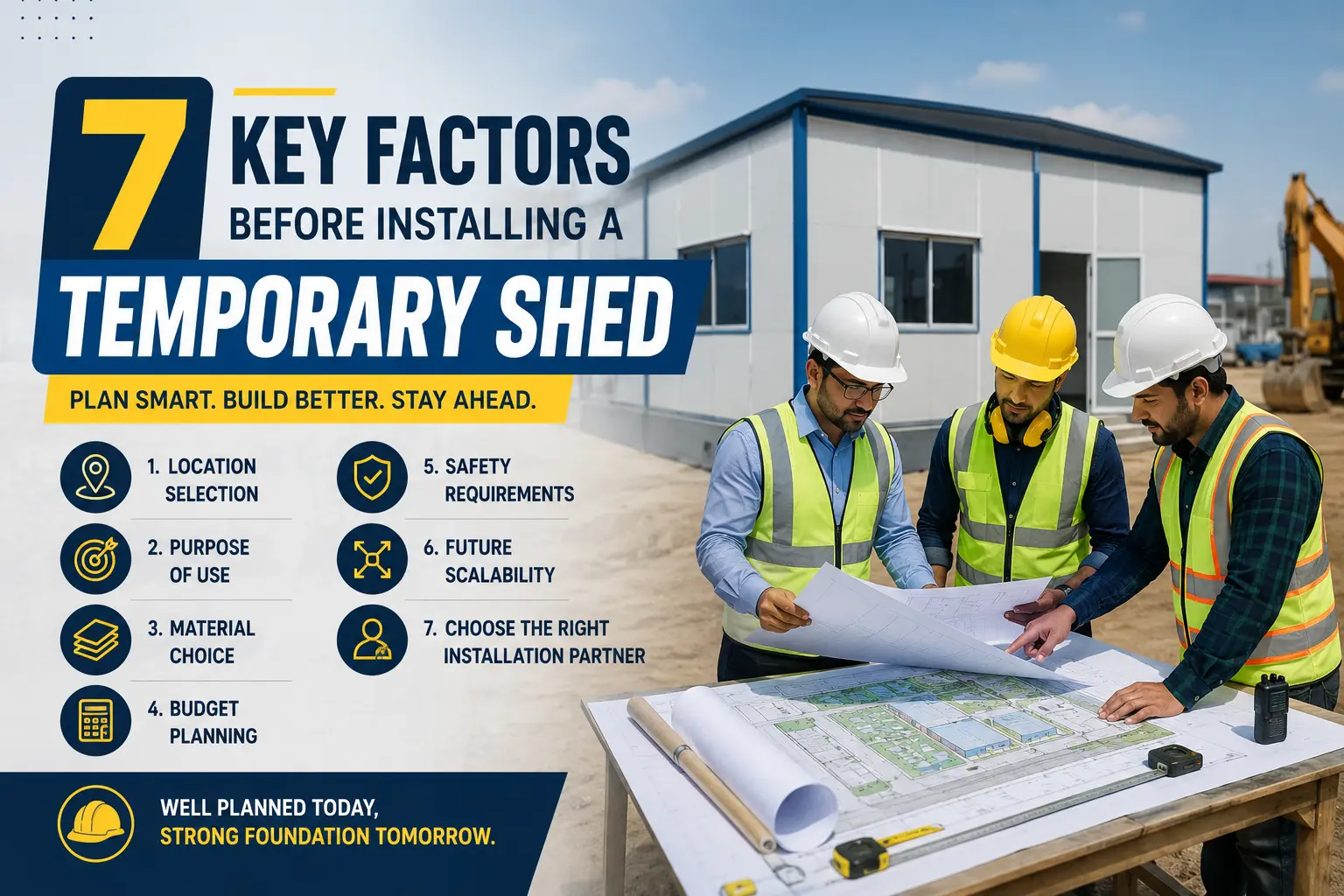
In today’s fast-paced industrial and construction environment, temporary shed installation has become a practical solution for businesses seeking flexible, cost-effective, and quickly deployable infrastructure. Whether you need storage space, a site office, a workshop, or protection for equipment and materials, proper planning is essential to ensure maximum efficiency and long-term value.
Before investing in a temporary shed, consider these seven key factors to make your project successful.
The location of your temporary shed plays a crucial role in its functionality and durability. A well-selected site ensures easy access, operational efficiency, and safety.
When selecting a location, consider:
A poorly chosen location can lead to operational delays, increased maintenance costs, and safety risks. Therefore, site assessment should be the first step in your prefab shed planning process.
Understanding the primary purpose of the shed helps determine its design, size, and features.
Common applications include:
Clearly identifying the intended use ensures that the shed meets operational requirements while avoiding unnecessary expenses. Purpose-driven planning is one of the most important aspects of successful site sheds deployment.
Material selection directly affects the shed’s strength, lifespan, and maintenance requirements.
Popular materials include:
Choosing quality materials ensures your temporary shed installation remains reliable under varying weather and operational conditions.
A realistic budget helps prevent unexpected costs and project delays.
Your budget should include:
While it may be tempting to choose the lowest-cost option, investing in quality materials and professional installation often delivers better long-term value and reduced maintenance costs.
Safety should never be overlooked when planning a temporary shed.
Key safety considerations include:
Proper safety planning protects workers, equipment, and stored materials while minimizing operational risks.
Business requirements often change over time. A temporary shed should be capable of adapting to future needs.
Consider whether the structure can:
Modern prefab sheds offer modular designs that make expansion and relocation simple and cost-effective.
The success of any temporary shed installation depends heavily on the expertise of the supplier and installation team.
Look for a provider that offers:
An experienced partner can help identify potential challenges early and ensure the project is completed safely, efficiently, and within budget.
A well-planned temporary shed installation can provide businesses with flexible, durable, and cost-effective infrastructure solutions. By carefully considering location selection, intended purpose, material choice, budget planning, safety requirements, scalability, and the expertise of your installation partner, you can maximize the value of your investment.
Whether you’re planning site sheds for a construction project or undertaking comprehensive prefab shed planning for industrial operations, taking these factors into account will help ensure a successful and efficient installation process.
WhatsApp us